
Data Mining Gold in the Age of Agentic AI
Remember when people said "data is the new oil"? Well, in 2026, it's more like data is gold — and agentic AI is your expert miner with a metal detector.
But here's the twist: it's not about hoarding every digital speck. It's about finding the nuggets that tell you why customers behave the way they do, and then using that insight to build genuine relationships that drive them back to your site. Let's dig in.
The Science Behind the Click
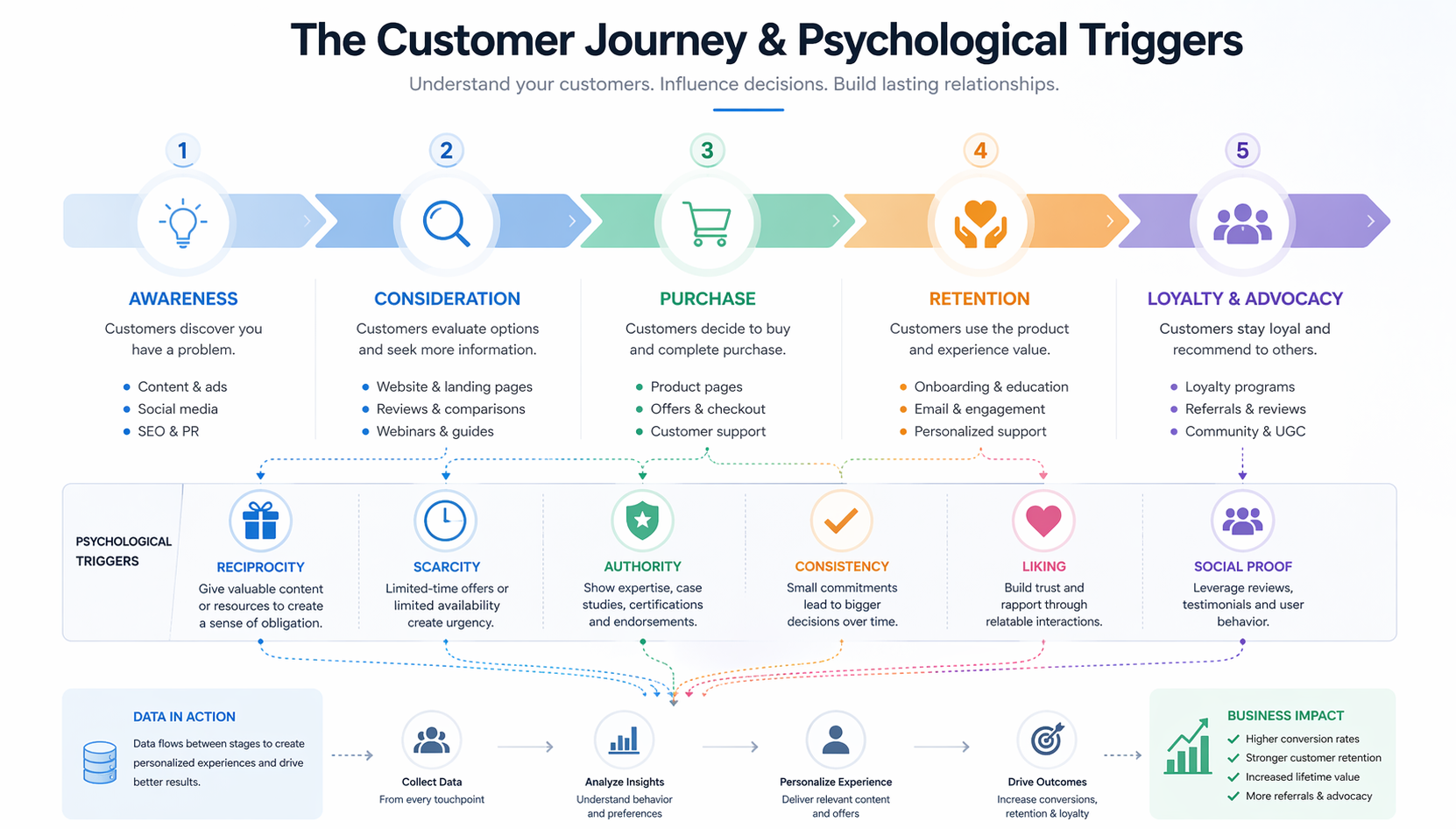
Here's something fascinating: every click, scroll, and pause on your website is a tiny window into your customer's mind. Behavioral science has shown us that purchasing decisions are rarely purely rational. Dr. Robert Cialdini's seminal work on influence identified six key principles — reciprocity, scarcity, authority, consistency, liking, and social proof — that still drive consumer behavior today.
When you combine these timeless psychological insights with modern data collection, something powerful happens. You stop guessing what customers want and start knowing.
As we explored in our earlier post on building intelligent customer profiles, creating detailed personas isn't about stereotyping — it's about pattern recognition at scale. Agentic AI takes this further by actively seeking out these patterns across multiple touchpoints, not just passively collecting data.
Your Data Goldmine: Connecting the Dots
So where exactly is this gold buried? Let's talk about the three richest veins:
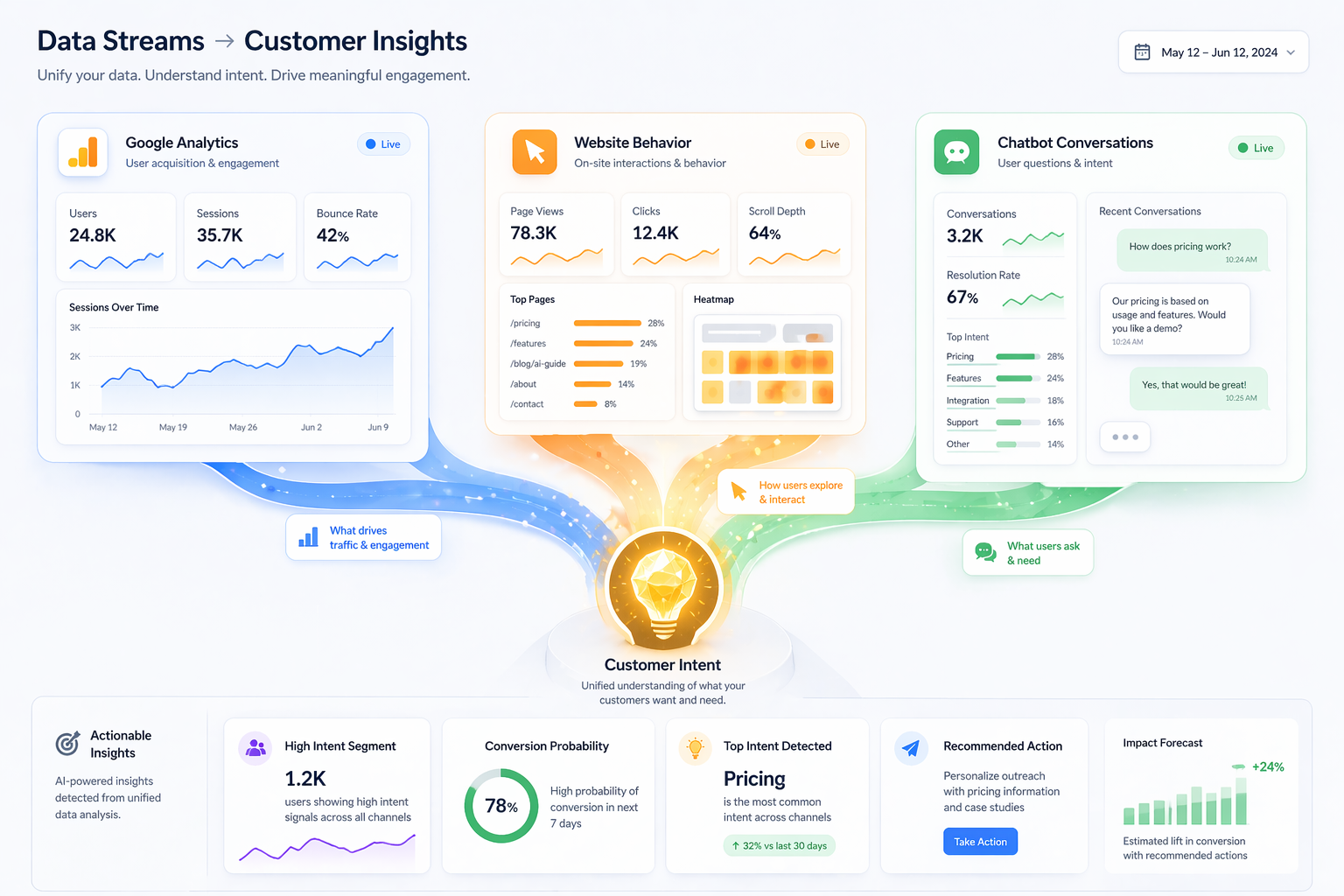
Google Analytics tells you the what: which pages people visit, how long they stay, where they drop off. But it doesn't tell you the why.
Website behavior tracking (heatmaps, scroll depth, click patterns) adds another layer, showing you how people interact with your content. Are they frantically clicking? Casually browsing? Ignoring your carefully crafted call-to-action?
But here's where agentic AI shines: chatbot conversations. When a visitor asks "Do you offer same-day delivery?" or "What's the difference between these two products?" they're literally telling you their intent. Most businesses let these golden conversations vanish into the void. Smart ones mine them for insights.
Putting it together:
Google Analytics shows 70% of visitors abandon their cart on the shipping page. Heatmaps reveal they're not even scrolling to see the delivery options. But it's the chatbot that tells you why: "I need this by Friday for a birthday — can you guarantee delivery?"
Suddenly, you're not just seeing a problem. You're understanding a human need.
Trust Is the Currency — Value Is How You Earn It
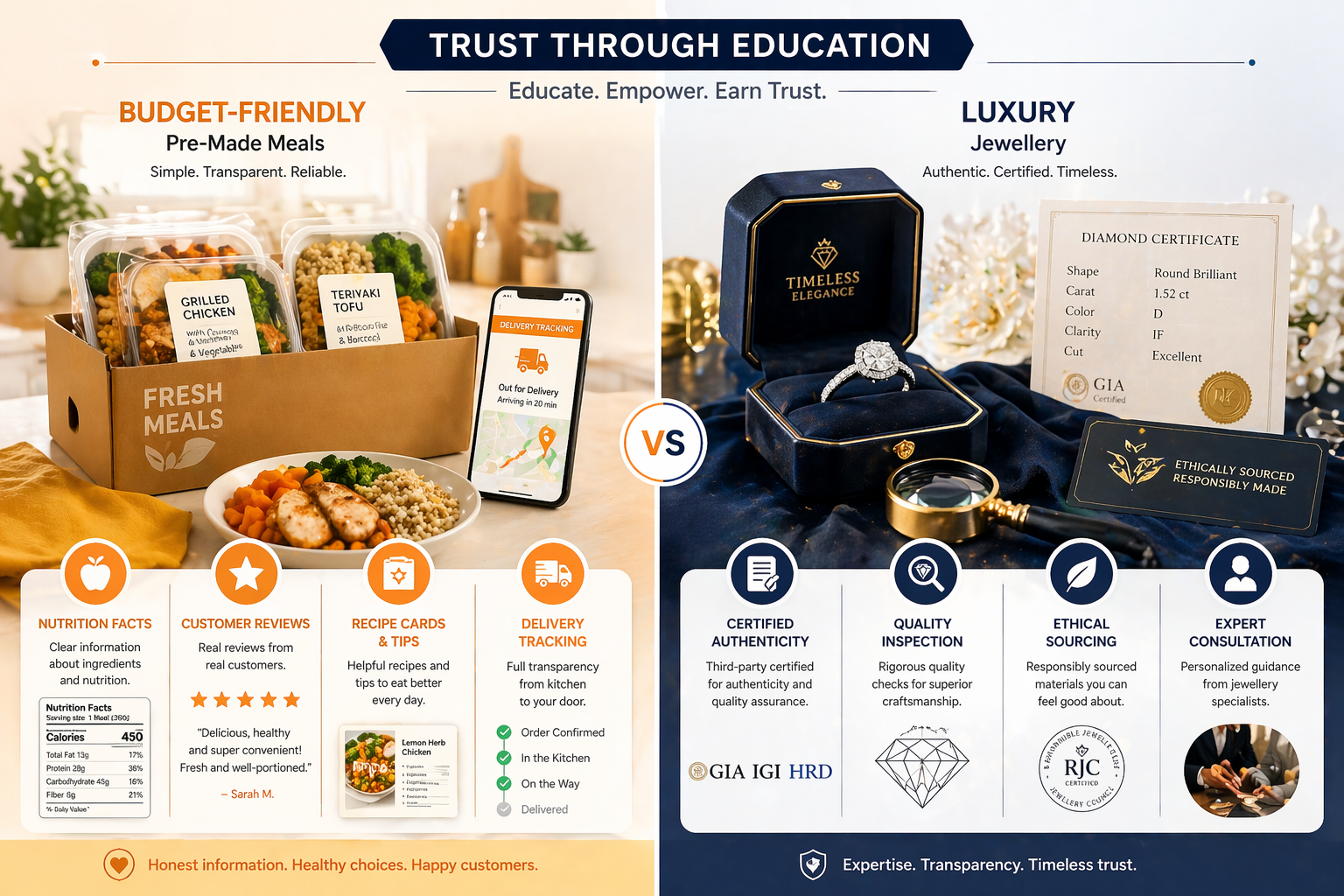
Here's a truth that transcends industries: people buy from those they trust. But trust isn't built overnight, and it doesn't look the same whether you're selling £5 pre-made meals or £5,000 engagement rings.
For pre-made meal services, trust means:
- Nutritional transparency
- Clear ingredient sourcing
- Customer reviews and photos
- Educational content about meal prep and nutrition
For high-end jewellery, trust requires:
- Certification and authenticity guarantees
- Detailed craftsmanship stories
- Expert guidance on quality and value
- Transparent pricing and ethical sourcing
The common thread? Educational, value-driven content that helps customers make informed decisions.
Research from the Content Marketing Institute shows that 70% of consumers prefer learning about products through content rather than traditional advertising. When you use data mining to understand what questions your customers are asking (hello, chatbot logs!), you can create content that directly addresses their concerns.
Agentic AI doesn't just help you collect this data — it helps you act on it. It can identify that customers who ask about "diamond clarity" often return three times before purchasing, or that visitors who read your "meal prep for beginners" guide are 3x more likely to subscribe.
The Backend Brain: Where Magic Meets Architecture
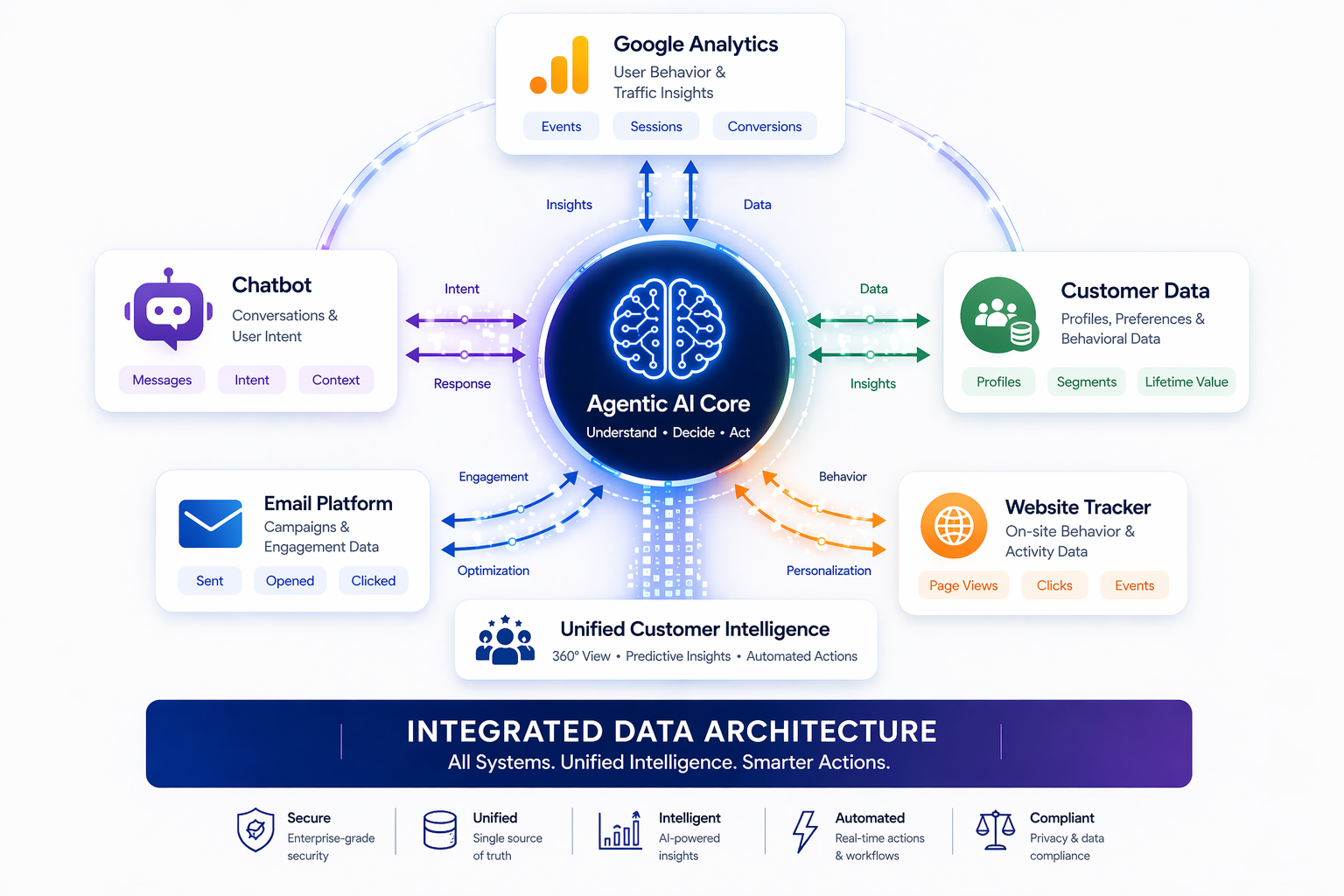
Here's the part most people gloss over: none of this works without a well-designed backend system. You can have all the AI agents in the world, but if they're not talking to each other, you're just creating expensive silos.
Think of it like this: your Google Analytics data, your chatbot conversations, your CRM, your email platform — they're all departments in a company. If they don't share information, you get chaos. If they collaborate brilliantly, you get synergy.
What does this require?
Expert marketing skills
To ask the right questions and interpret behavioral patterns. Technology doesn't replace marketing intuition — it amplifies it.
Data architecture know-how
To build systems that integrate seamlessly. This isn't just about APIs; it's about creating a unified customer view that updates in real-time.
Strategic AI implementation
Where agentic AI isn't just a buzzword but actually acts on insights — segmenting audiences, personalizing content, triggering follow-ups.
The ROI impact?
According to McKinsey, companies that excel at personalization generate 40% more revenue from those activities than average players. But here's the kicker: that personalization only works if your systems are architected to support it.
The Bottom Line: From Data to Dollars
At the end of the day, data mining with agentic AI isn't about surveillance or manipulation. It's about understanding — and then serving your customers better.
When you combine behavioral science, real-time data from multiple sources, and intelligent AI systems that actually do something with that information, you create a virtuous cycle:
Better insights → More relevant content → Increased trust → Higher conversion rates → More data → Even better insights
The businesses winning in 2026 aren't those with the biggest budgets. They're the ones that have mastered the art of listening at scale, responding with genuine value, and building systems that make all of this possible without manual grunt work.
Ready to start mining your data gold? The tools are here. The science is proven. The question is: what will you do with it?
Ready to put agentic AI to work for your business?
Start with a free 20-minute chat with Spencer. No pitch — just a genuine conversation about what's possible for your specific situation.
Book a Free ChatWant to go deeper?
Check out our earlier post:
The Psychology of a Chatbot Buyer: Decoding the Digital Mind Behind the "Add to Cart" Click →References & Further Reading
- Cialdini, R. B. (2007). Influence: The Psychology of Persuasion. Harper Business.
- Content Marketing Institute. (2024). B2C Content Marketing Benchmarks, Budgets, and Trends.
- McKinsey & Company. (2021). "The value of getting personalization right — or wrong — is multiplying."
- Kahneman, D. (2011). Thinking, Fast and Slow. Farrar, Straus and Giroux.
- Google Analytics Academy. (2024). Advanced Google Analytics for E-commerce.
How are you using data in your business today? What's the biggest gap between what you collect and what you act on? We'd love to hear from you at sales@reachout.systems
Spencer Griffiths
CEO, ReachOut.Systems